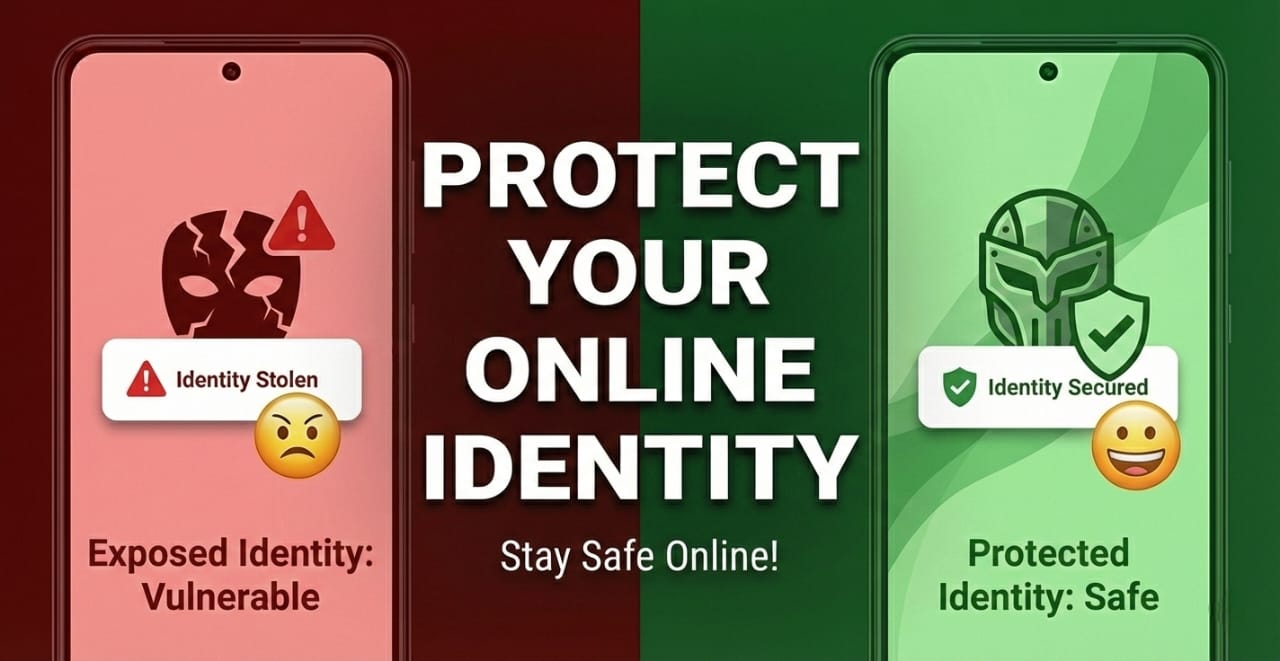
In 2026, online identity isn’t just an email address or social media account; it’s a combination of your digital reputation, personal data, and financial security. Millions of people use the internet every day, but very few understand how much their online identity could be exposed. Data leaks, hacking attempts, and phishing scams have become more common than ever. The purpose of this guide is to provide simple and practical tips on how to protect your online identity and stay secure in the digital world.
Why Online Identity Protection Matters More in 2026
Internet usage is no longer limited to just browsing. People engage in online shopping, freelancing, banking, and remote work. Every account is an entry point to gain access to your personal information.
Cybercriminals now use automated tools that easily detect weak passwords and unsecured accounts. Therefore, online security has become a basic part of knowledge by 2026. Failure to protect your identity risks both financial loss and reputation damage.
What is Online Identity?
Online identity includes the following:
- Email accounts
- Social media profiles
- Banking apps
- Freelancing platforms
- Shopping websites
- Cloud storage accounts
Every platform stores your name, email, phone number, or payment information. If any of these accounts is compromised, a chain reaction can start.
Strong Password Strategy
The most basic yet powerful step is a strong password. Many people use simple passwords that are easily guessed.
A strong password means:
- A mix of letters, numbers, and symbols
- At least 10–12 characters
- A different password for each account
Using the same password on multiple websites is the worst mistake. If one site is hacked, other accounts are also at risk.
The Importance of Two-Factor Authentication (2FA)
Just a password is not enough. Two-factor authentication adds an extra layer. This involves verifying an additional code at login, usually sent via SMS or an authentication app.
Even if a hacker obtains the password, it’s difficult to access the account without 2FA. In 2026, this feature is available on almost every major platform, and its use is strongly recommended.
How to Recognize Phishing Attacks
Phishing emails or fake websites aim to steal your login data. These emails often appear official and create pressure for immediate action.
If an email asks for personal details or passwords, instead of replying directly, manually open the official website to verify. Avoid clicking on suspicious links.
Fake Websites and Scams
The design of fake websites in 2026 is so realistic that the average user is easily confused.
To check whether a website is secure:
- Check the URL carefully
- Have an HTTPS secure connection
- Avoid spelling mistakes
- Beware of unknown pop-ups
Make online payments only on trusted platforms.
Controlling Your Digital Footprint
Every post, comment, and online activity creates your digital footprint. If you’ve shared unnecessary information in the past, it can have long-term effects.
Deleting old accounts, removing unnecessary apps, and tightening privacy settings are effective ways to control your digital footprint.
Public WiFi Security
Entering login details over public WiFi can be risky. Hackers can sniff data on the same network.
Perform sensitive tasks only on trusted networks. It’s best to avoid logging into personal accounts when using public networks.
Regular Security Checkups
Just as physical health requires a checkup, digital health also requires a regular review.
Every few months:
- Update passwords
- Check active sessions
- Verify account recovery emails
- Review suspicious activity logs
These small habits provide long-term protection.
Common Online Security Mistakes
People often assume their accounts won’t be targeted. But automated attacks randomly target vulnerable accounts.
Another mistake is giving unknown apps full access. Not every app is trustworthy, so it’s important to check reviews and permissions.
Future of Digital Identity Protection
Biometric authentication and AI-based security will become stronger in the coming years. But threats are evolving along with technology.
Therefore, relying solely on tools is not enough; awareness and responsible usage are essential. Staying safe in the digital world is a continuous process.
Final Thoughts
Protecting your online identity is no longer optional. By 2026, every user should have basic digital security knowledge. Steps like strong passwords, two-factor authentication, phishing awareness, and controlled sharing can protect you from major risks.
The internet is powerful, but careless use can be dangerous. If you start taking your online identity seriously today, you can avoid many unnecessary problems in the future. Security awareness is the real digital protection.