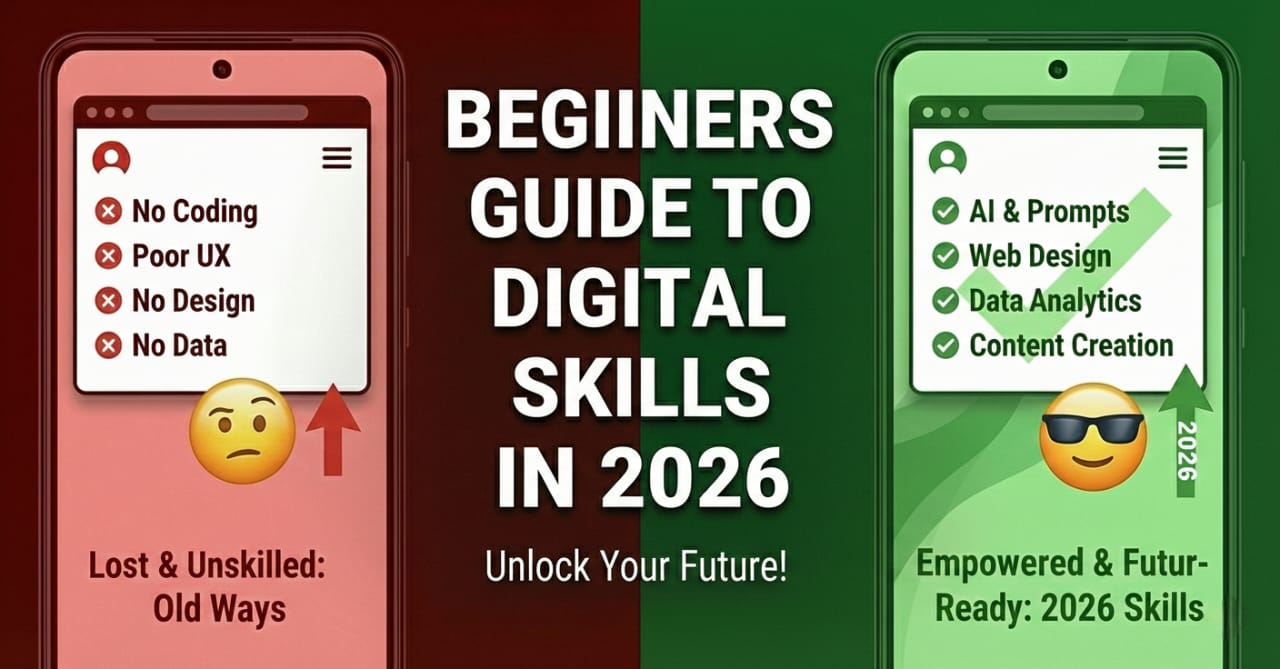
In 2026, digital skills are not just an option, but a necessity. Every field is shifting online, businesses are relying on digital platforms, and remote work has become commonplace. If you’re a student, a job holder, or want to create your own online income source, learning digital skills can be the most powerful decision. In this guide, we’ll explain, from a beginner’s level, what digital skills are, which skills are in demand, and how you can get started with zero experience.
Why Digital Skills Are More Important in 2026
The market in 2026 will become more skill-based than traditional jobs. Companies are valuing practical skills over degrees. Freelancing, remote jobs, content creation, and online business models are growing rapidly.
Artificial intelligence tools and automation have also increased competition. Therefore, basic knowledge alone is not enough; practical digital expertise is essential. Those who acquire digital skills early are closer to financial freedom.
What Are Digital Skills?
Digital skills mean using computers, the internet, and online tools productively. This isn’t just about typing or using social media. It includes problem-solving, content creation, marketing, data handling, and communication skills.
In simple terms, digital skills are abilities that help you earn money online, find a remote job, or build an online business.
Most In-Demand Digital Skills in 2026
Certain skills will be in high demand and have high income potential in 2026. These include SEO optimization, content writing, graphic design, video editing, social media marketing, web development, and data analytics.
Each skill has its own scope. You don’t necessarily have to learn them all. Focusing on one or two skills and becoming an expert is a more effective strategy.
How to Start Learning Digital Skills From Zero
If you’re a complete beginner, first identify your interests. Not every skill is suitable for everyone. If you’re creative, graphic design or video editing may be a better option. If you enjoy writing, you can start with content writing or blogging.
Use free resources initially. Learning can begin with online tutorials, blogs, and practice projects. The most important thing is consistency.
Step 1: Choose One Skill and Focus
The most common mistake beginners make is starting with 4–5 skills at once. This leads to confusion and burnout.
Choose one skill and focus on it for at least 3 months. Practice daily and build small projects. Once you gain basic confidence, move to the advanced level.
Step 2: Build Practical Projects
Just looking at theory isn’t enough. Practical implementation is essential.
If you’re learning SEO, optimize your website. If you’re learning design, create sample logos and posters. If you’re learning content writing, publish regular blog posts.
Building a portfolio is crucial for long-term success.
How to Monetize Digital Skills
After learning a skill, the next step is earning.
You can use freelancing platforms, create your own website, or attract clients through social media.
Blogging, affiliate marketing, and digital products are also strong options for passive income. But remember, earning money takes time. Don’t expect instant results.
Common Mistakes Beginners Make
Many people just watch motivational videos but don’t take action. Some give up after just one week of practice.
Digital skill mastery requires patience. Consistency is the biggest factor.
Another common mistake is looking for shortcuts. Real growth comes from structured learning and practice.
Time Required to See Results
If you dedicate 1–2 hours daily, you can build a strong foundation in 3–6 months.
You can start earning in 6–12 months, if you practice properly and build a portfolio.
Every person’s learning speed is different, so avoid comparisons.
Future of Digital Careers
Remote work culture is growing. Companies are hiring international talent. AI tools are increasing productivity, but the demand for skilled people is still high.
The future belongs to those who are adaptable and believe in continuous learning. Digital skills are an asset that increases in value over time.
How to Stay Consistent
Set a daily routine. Make even small progress count. Reduce social media distractions and keep learning time fixed.
If possible, join a small online community where you can share your learning. Accountability accelerates growth.
Final Thoughts
Digital skills are essential for both survival and growth in 2026. Whether you want to get a job, start freelancing, or build your own online business, digital expertise gives you a competitive edge.
Start small, stay consistent, and be patient. Avoid shortcuts and focus on real learning. If you start a skill today, you can be in a strong position financially and professionally by next year.
This journey may be slow, but the rewards are long term and stable.