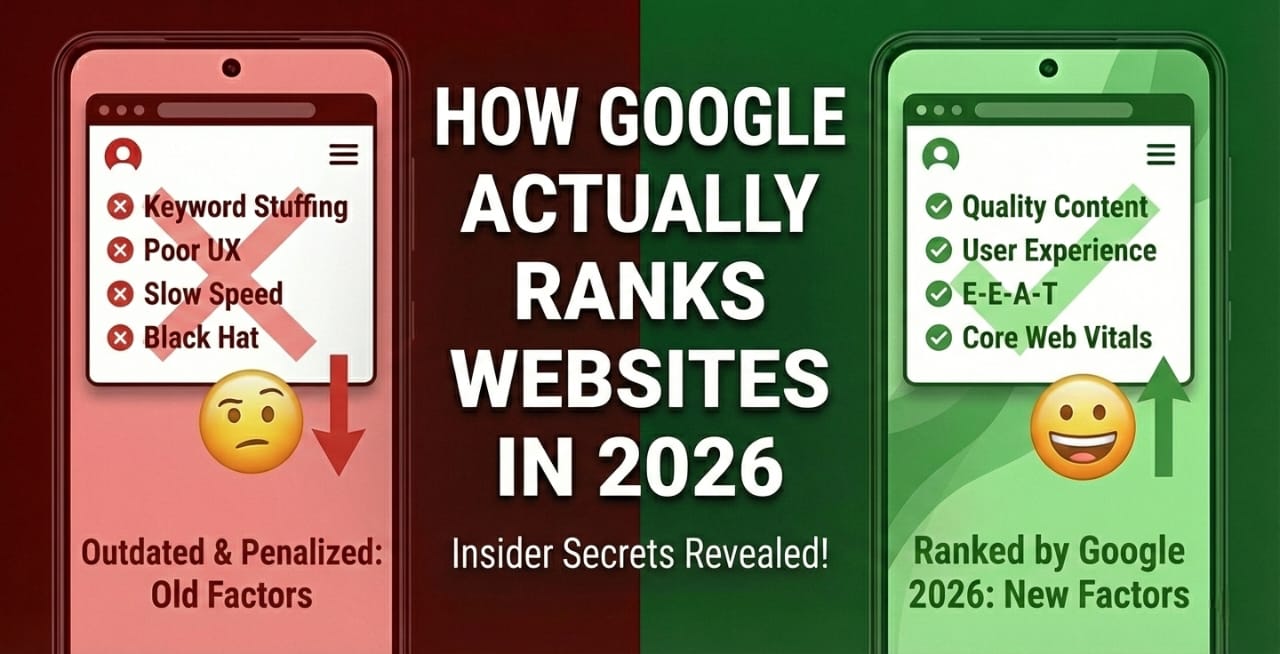
The biggest question for every website owner in 2026 is how Google ranks websites. Many people look for shortcuts, but the reality is that Google’s ranking system is complex and constantly evolving. If you understand the basic process of ranking, you can naturally improve your website. In this guide, we’ll explain in a simple and beginner-friendly way how Google’s crawling, indexing, and ranking process works.
Why Understanding Google Ranking Matters in 2026
Competition has increased in every niche. Google handles billions of searches every day, and its goal is to show the best possible results for each search.
If you understand Google’s ranking logic, you can act strategically instead of guesswork. In 2026, simply writing content isn’t enough; it’s also important to optimize quality, structure, and user experience.
Step 1: Crawling – Google’s First Process
Crawling involves Google bots searching the internet for new and updated pages. Google bots scan your website when you publish a new post.
If the website is properly structured, has strong internal linking, and has a sitemap available, the crawling process is smooth. Crawling can be affected if the site is slow or has broken links.
Step 2: Indexing – Storing Data
After crawling, Google decides whether to index the page or not. Indexing means that Google stores the page in its database so that it can be displayed in future searches.
If the content is thin, duplicate, or low quality, Google either does not index it or ignores it. Therefore, unique and detailed content is essential.
Step 3: Ranking – Displaying Results
During the ranking stage, Google analyzes the user’s search query and displays the best matching pages from its index.
Ranking factors include:
- Content relevance
- User intent match
- Website authority
- Page experience
- Content depth
Google’s goal is to ensure users receive the most accurate and helpful answers.
The Role of Search Intent
Understanding search intent is a key factor in ranking. If a user searches for “how to start blogging,” they want a complete guide.
If you simply write a short overview, ranking will be difficult. Making content relevant to search intent improves ranking.
Content Quality and Depth
By 2026, Google will begin to understand context and meaning. The era of keyword stuffing is over.
Quality content should include:
- Clear explanation
- Logical structure
- Proper headings
- Helpful examples
- Real problem-solving
All of these things should be present.
User Experience and Page Speed
If a website loads slowly, users will exit. A high bounce rate can negatively affect ranking.
Mobile-friendly design and fast loading speed are important ranking signals in 2026.
The Impact of Website Authority
Authority refers to how trustworthy Google considers your site.
Authority is built through:
- Consistent publishing
- Clear niche focus
- Helpful content
- Trust over time
New sites take time to rank because trust is built gradually.
Internal Linking and Structure
If a website’s structure is clear and posts are connected to each other, it’s easier for Google to understand the site’s focus.
Publishing random topics weakens authority. A focused niche strategy is better for ranking.
Common Myths About Google Ranking
Many people think that:
- More backlinks = guaranteed ranking
- More keywords = better position
- One viral post = permanent traffic
The reality is that ranking is a combination of multiple factors. Shortcuts don’t work in the long term.
How Long Does Ranking Take?
If a website is new, it takes time for Google to build trust.
Generally:
- 1–2 months discovery phase
- 3–6 months slow growth
- 6+ months stable ranking potential
Consistency is the most important factor.
Future of Google Ranking
AI and machine learning are making the ranking system smarter. Google now measures not just words, but also context and user satisfaction.
This means that quality and authenticity will become even more important in the future.
Final Thoughts
The Google ranking system is complex, but not difficult to understand. If you focus on a crawl-friendly structure, high-quality content, search intent, and user experience, rankings can naturally improve.
A successful website in 2026 will be one that provides real value to users. Patience, consistency, and a smart strategy are the keys to long-term success. If you continue learning and avoid shortcuts, growth will be slow but sustainable.